
Giorgio Morandi
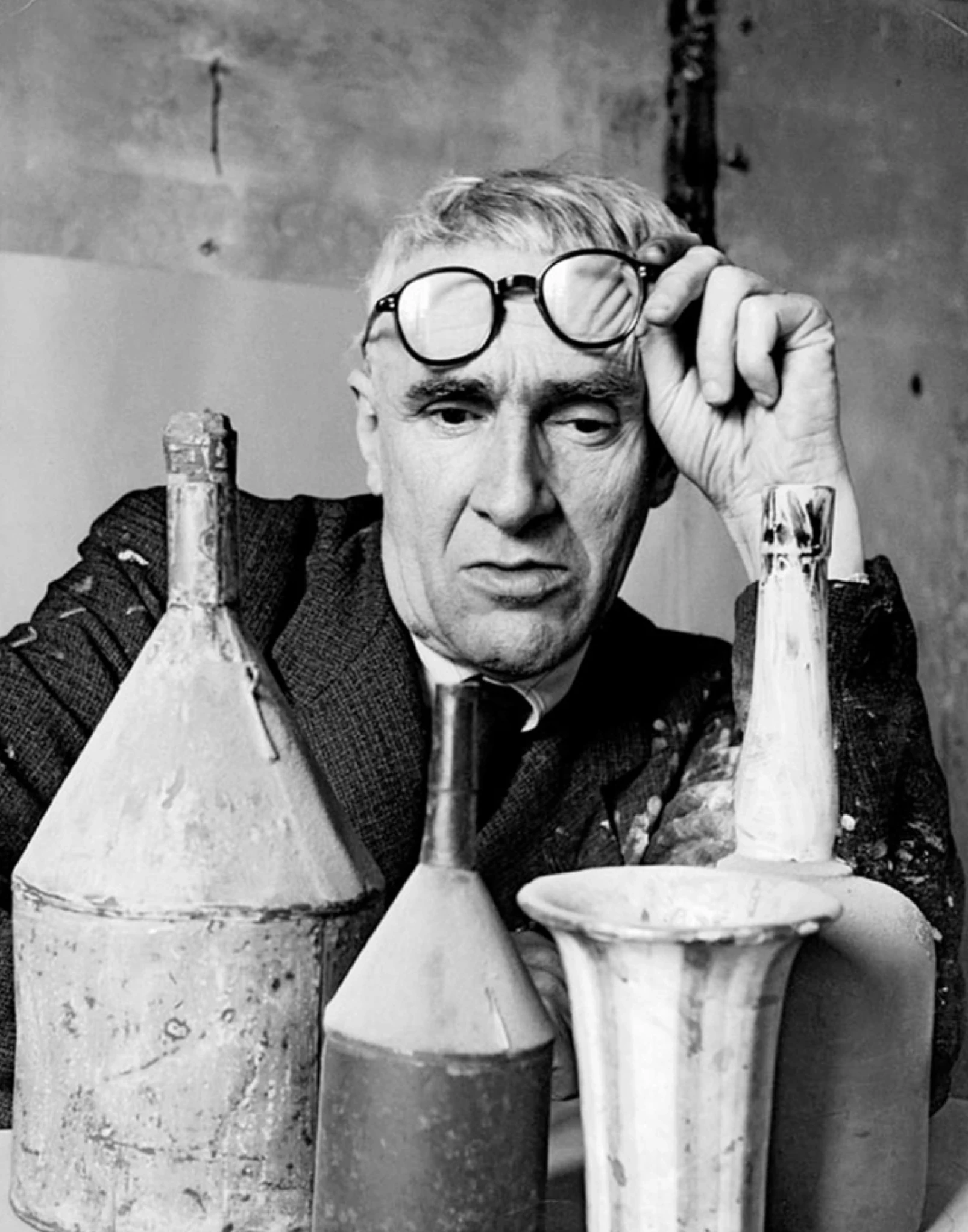
Giorgio Morandi is regarded as one of the most celebrated and influential Italian artists of the twentieth century. He is best known for his paintings, drawings, and etchings depicting carefully arranged still lifes of everyday objects.
Although Morandi spent almost his entire life in his hometown of Bologna and rarely travelled outside Italy, his work gained international recognition and was admired by both avant-garde circles and traditional artistic communities during and after his lifetime. Between 1913 and 1914, he established connections with Italian Futurist artists such as Umberto Boccioni, Giacomo Balla, and Fortunato Depero. From 1918 to 1919, he briefly participated in the Metaphysical School (Scuola Metafisica) alongside Giorgio de Chirico and Carlo Carrà.
By 1920, Morandi had developed the distinctive visual language that would define his career: intimate still lifes and landscapes characterized by quiet compositions, subtle tonal relationships, and a profound investigation into perception. His work remained independent from any specific movement or artistic school, following a deeply personal path of observation and refinement.
Throughout his five-decade career, Morandi worked almost exclusively in series, repeatedly exploring a limited group of subjects, including bottles, boxes, vases, flowers, and occasional landscapes. Through subtle variations in composition, colour, tone, scale, and mark-making, he transformed ordinary objects into meditations on space, light, and form. His repeated arrangements of familiar objects reflected his belief that “nothing is more abstract than reality.”
From 1907 to 1913, Morandi studied at the Accademia di Belle Arti in Bologna, where he later taught engraving and etching from 1930 to 1956. Etching played a fundamental role in his artistic practice, allowing him to explore variations of composition through delicate monochromatic forms. His prints reveal his departure from academic realism and his interest in light, shadow, and the essence of objects beyond their everyday appearance.
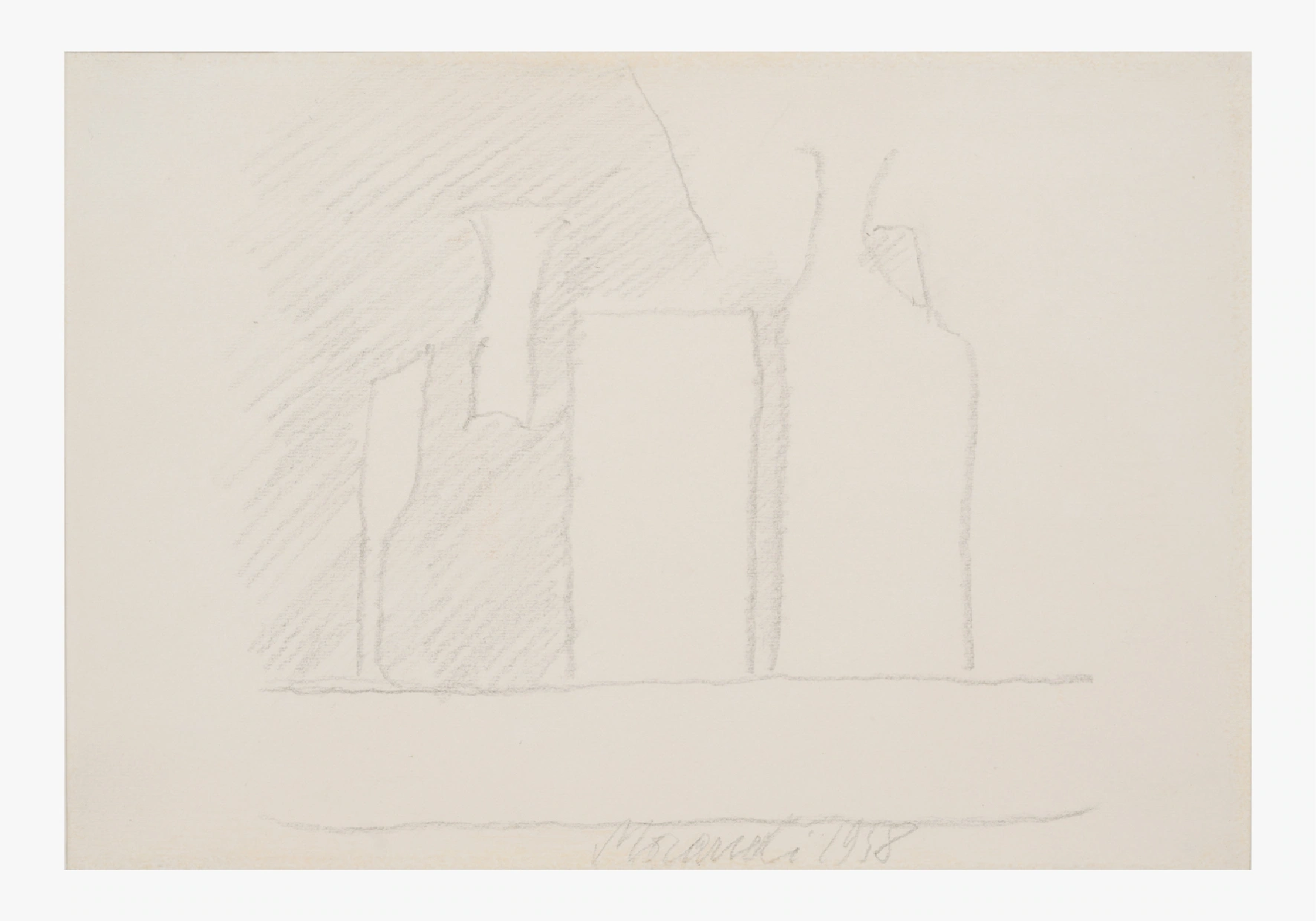
The present early etching depicts a group of vessels, including bottles, a water jug, a rectangular container, and an urn. Through tonal variations, repeated yet distinct volumes, and ambiguous spatial relationships, the work demonstrates Morandi’s enduring exploration of perception, light, and form, which has had a profound influence on twentieth-century and contemporary art.
Collectibles
For information on available works by Giorgio Morandi, please contact us.
CONTACT